If You're a White Women and Are Currently Pregnant With a White Baby Boy Twitter
Kyana Brathwaite, a registered nurse from Havertown, Pennsylvania, said she'southward seen instances of racism throughout her career every bit a nurse and experienced it while pregnant. "She treated me as if I was a piece of cattle," she said about her doctor. JOE LAMBERTI/COURIER POST-USA TODAY NETWORK
At six months pregnant, Iaishia Smith asked her nutritionist to recommend a snack loftier in protein to control her blood sugar level.
The nutritionist's first suggestion?
"Something leftover from dinner such as fried chicken."
"Hither I am, 35 years old, pregnant, there'south diabetes, history of stillbirth. And you lot're telling me, a Blackness adult female, to eat fried craven?," said Smith, a program manager at Cisco Systems who lives in Avenel, New Jersey. "I told her, 'I can't imagine that fried chicken is a skillful nighttime snack. Is that something that you'd recommend to all of your patients?'"
Nathalie Riobè-Taylor, a mom of three, including a pair of twins, in Nyack, New York, was denied hurting medication for both of her pregnancies, despite asking for it repeatedly.
Kyana Brathwaite, a registered nurse from Havertown, Pennsylvania, said she got no empathy from her doctor when she was significant.
"She treated me equally if I was a piece of cattle," she said.
Can't wait to write a tell all nearly my feel during my terminal two trimesters dealing with incompetent doctors at Montefiore
— ✨ (@Radieux_Rose) April 17, 2020
And Bister Rose Isaac, a 26-yr-old graduate student from the Bronx, died after an emergency cesarean section, but 4 days after tweeting that she was "dealing with incompetent doctors."
Black pregnant women feel institutional racism from the health care organisation. And doctors and medical professionals are both unconsciously biased and overtly racist.
And that, researchers say, contributes to racial disparities in mortality rates.
Black women are dying in childbirth 2½ times more often than white women — 37.1 vs xiv.7 deaths per 100,000 live births, according to data released earlier this year by the National Center for Health Statistics.
Despite the fact that Black women brand up about thirteen% of the population of American women, they die in numbers non far backside white women, who make up 60%. From 2006 to 2017, the about recent years analyzed by the Centers for Illness Command and Prevention, 2,432 Blackness women died compared to ii,756 whites.
Racism in Blackness maternal health
Black mothers share their feel.
Tania Savayan, tsavayan@lohud.com
Near 700 women die from pregnancy-related complications in the U.S. every twelvemonth, and sixty percent of those are preventable. And infants born to African American mothers are dying at twice the rate as infants born to non-Hispanic white mothers, according to the CDC.
Socioeconomic indicators, such every bit teaching and income level, do non make a departure, said Jamille Fields Allsbrook, director of Women'southward Health and Rights at the Washington D.C.-based Eye for American Progress, pointing to a CDC report that found that Black women with at least a college degree were still 5.2 times more probable to dicethan their white counterparts.
"The issue is multifaceted, the causes are multifaceted, only the curt answer for the underlying reasons is racism," she said. "In that location's implicit and explicit bias in the healthcare arrangement. And and so sometimes that leads to sure providers delivering substandard care, and besides even but less sort of nefariously, not acknowledging pain concerns."
Dr. Neel Shah, an assistant professor of Obstetrics, Gynecology and Reproductive Biology at Harvard Medical School, believes that people used to call back disparities in maternal expiry rates had to exercise with race.
No, he says. Information technology's because of racism.
"What's happening at present is people are trying to come up to grips with that understanding and trying to effigy out what to do nearly it," said Shah.
Creating that understanding is critical. It's a life and expiry matter.
Share your stories
The USA TODAY Network stands in solidarity with Black communities as an ally in the fight against systemic racism, racial injustice and discrimination in all its forms. Black lives matter.
As nosotros continue to report on local issues of racial disinterestedness and social justice in our news pages, we strongly encourage perspectives and stance from diverse voices in our communities to inform, sustain and abound the attain and value of our opinion pages. We invite people of color to share their stories, voice their questions and concerns and collaborate with us to drag our community'southward dialogue as the national reckoning on race continues.
To contribute, please contact Ed Forbes, regional director for date and opinion at eforbes@gannett.com.
On July 2, Sha-Asia Washington, 26, died during an emergency C-section at Woodhull Medical Center, Brooklyn. The decease set off protests outside the hospital calling attention to racial disparities in maternal bloodshed rates.
Washington gave birth to a healthy baby daughter.
Amber Rose Isaac gave birth to a healthy son. Simply non before being ignored by doctors, who failed to diagnose a rare status that caused her blood platelet levels to drop dangerously low.
The depression platelets acquired her blood to thin, and when the hospital tried to perform an emergency c-department, her heart stopped immediately.
"If Amber was white, Amber would exist here," said her partner, Bruce McIntyre. "Amber would have got standard care if she were white. Amber did not receive standard care, and that's the trouble."
Even tennis star Serena Williams faced hospital staff who would non listen to her health concerns after giving nativity via a C-section. She was certain she was experiencing a pulmonary embolism; she knew the symptoms because she had a history with blood clots. In a Faddy encompass story, Williams said a nurse told her she was probably dislocated by her pain medication, and a doctor refused her a CT scan and instead did an ultrasound on her legs.
She eventually had the CT scan. She was right.
"As famous as she is and if we desire to throw in economics, of a certain ways, she's all the same a woman of color. She's African-American," said Dr. Paige Long Sharps, physician counselor at University Hospital in Newark. "And at present hither she is post-delivery complaining of 'I can't breathe. I'm having difficulty breathing. I'grand brusk of breath.' And she was brushed off."
Iaishia Smith believes that she had undetected gestational diabetes during her first pregnancy.
Afterward carrying her first child for 38 weeks, Smith had a stillbirth through an emergency C-department in 2017.
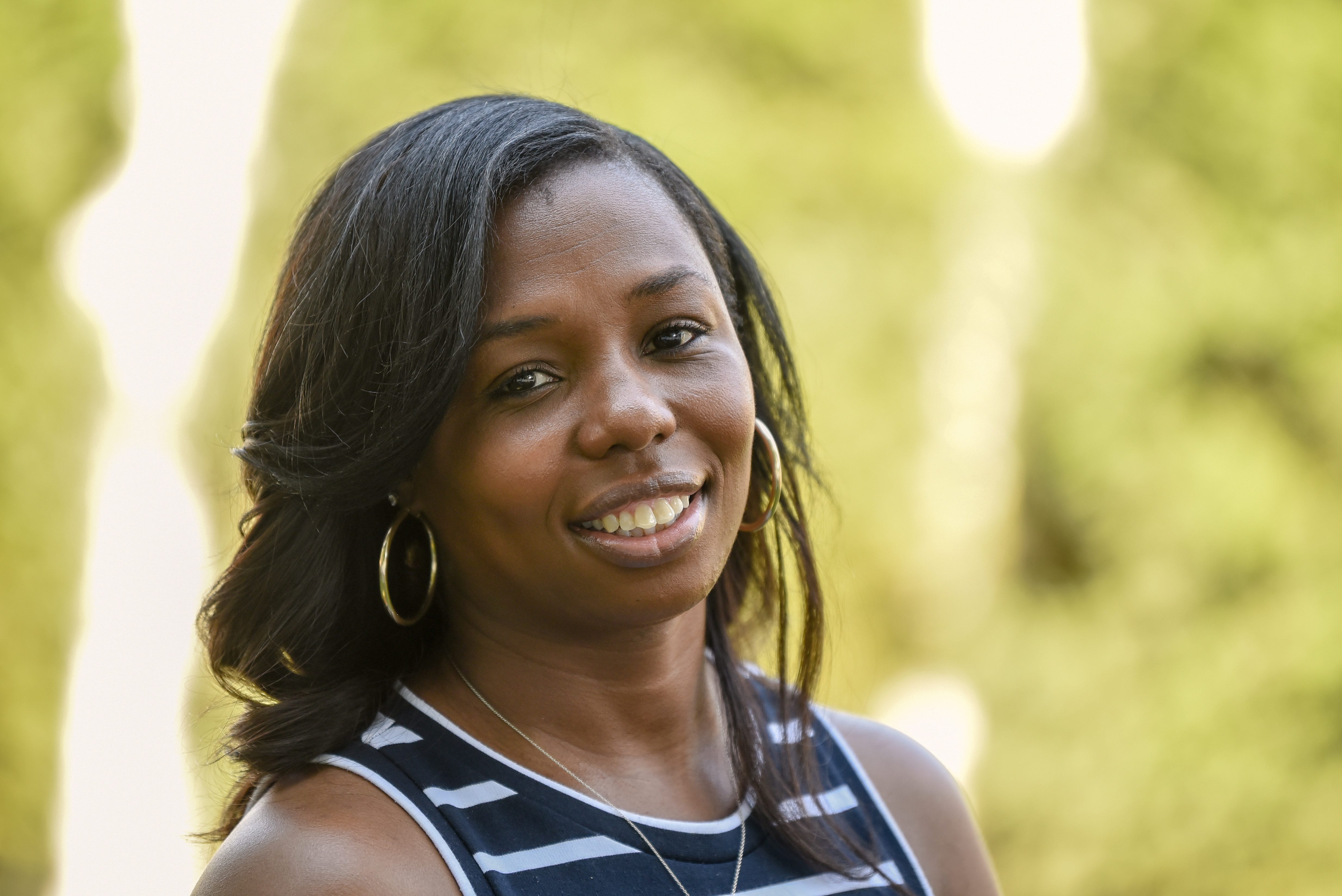
"I was doing all the things that I was supposed to be doing, eating healthy, that sort of thing," she said. "Her room was washed. We were planning for her futurity. And so to discover out she had passed away. We were devastated. I merely couldn't believe it. I yet can't believe it. I still weep. I withal question. I notwithstanding wonder. I never knew of anyone who lost their baby at 9 months. Never did I call back my kid would not be hither. Even today, it's so painful."
The merely definitive way to know whether undetected diabetes was the cause would take been a fetal autopsy — which she refused to agree to.
Since her seventh month of pregnancy, Smith said she had been complaining nearly a host of issues to her doctor.
"I told her 'My feet are swollen. I have these bumps on my feet. I am really thirsty. I'm super tired. And the doctor just discounted those things. I call back that my dr. dismissed my concerns. I think had there been a white adult female of my same age, of my aforementioned state of affairs, that she (her doc) would take looked into why it was happening," said Smith. "I experience, as a Black adult female, when you're pregnant, you need to be your own advocate."
During her first pregnancy, her perinatologist at JFK Hospital in Edison, asked her to consult with her "WIC counselor," referring to the Women, Infant and Children programme that assists low-income families.
Iaishia Smith thought something was incorrect. Her md disagreed and she lost her daughter.
Exist your own advocate: Iaishia Smith recounts the worst twenty-four hours of her life and how she learned to question doctors when she felt something was wrong.
Anne-Marie Caruso, NorthJersey
When Smith asked him why he thought she might be a WIC participant, she said he brushed information technology aside with a "I assumed."
"He saw me as a Black woman walking in in that location and he automatically assumed that I was a part of the program," said Smith. "I didn't make a big deal out of it because I knew I had to encounter him again. When you are a Black adult female, you learn to pick your battles."
By her second pregnancy, she had learned not to take any incidents of implicit or explicit bias past her medical team lightly. She had learned to trust her instincts and to listen to her body rather than having bullheaded faith in her doctors as the ultimate experts. She gave birth to her son in Baronial, 2019.
The American College of Obstetricians and Gynecologists, a professional organization with more than than 60,000 members, is working to change the civilisation of medicine and eliminate racial disparities in women's healthcare, said Maureen G. Phipps, CEO, of the system.
"It is critical that OB-GYNs provide respectful, patient-centered care that optimizes health outcomes and incorporates the lived experiences of all women, especially women of color," she said. "We must address racism in our hiring practices, training programs, infirmary quality comeback efforts and routine role visits."
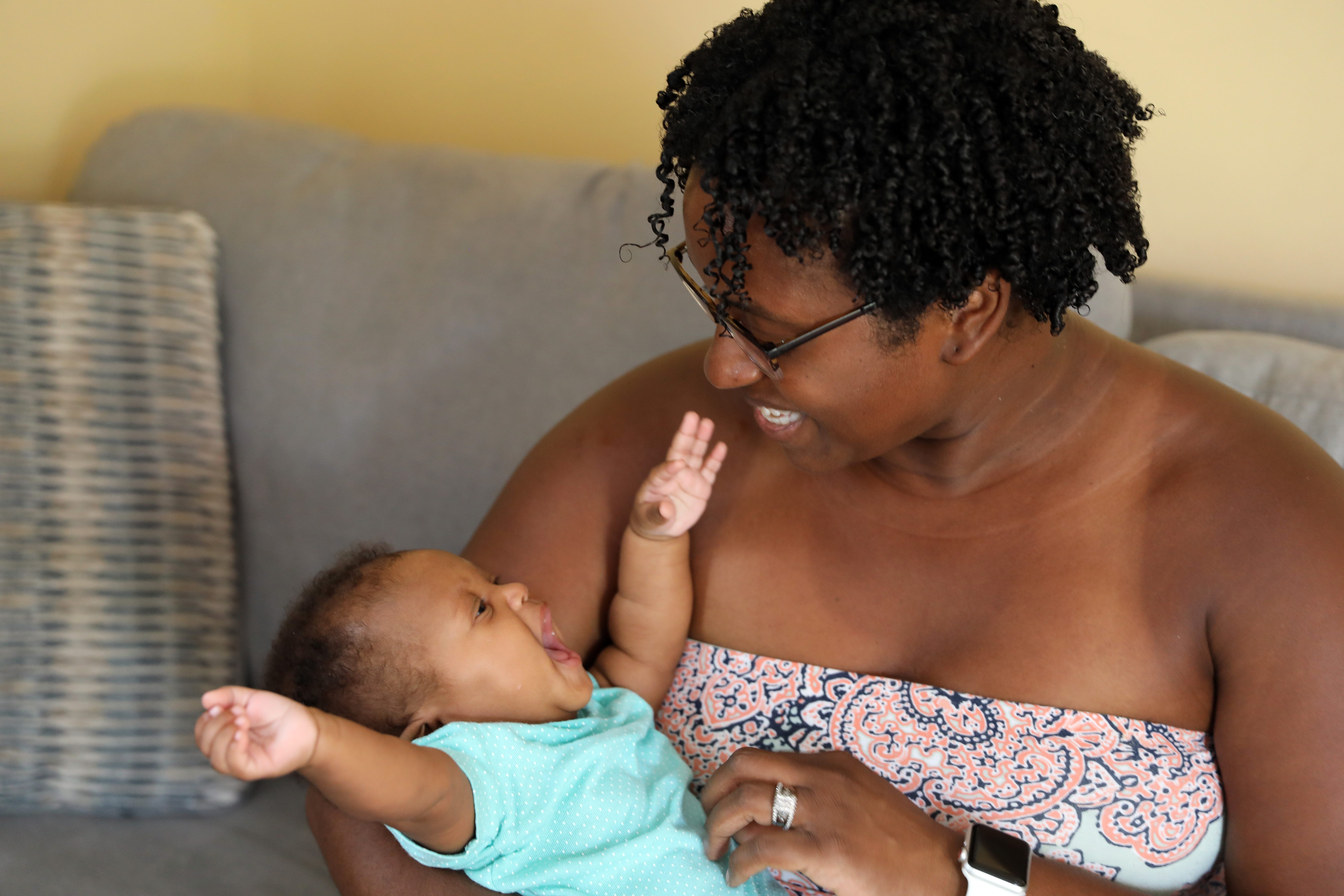
In 2018, there were four,055 Black/African American practicing OBYGNs, which represents ix.6% of the 42,260 active OBGYNs, according to the Association of American Medical Colleges.
Addressing racism in hiring practices tin take a direct bear upon on patient experience, believes Meredith LeJeune, a Garnerville, New York, mom who recently gave birth to a baby girl.
Six years ago, her first pregnancy was overseen by a Black physician in Atlanta.
The difference between that feel and the i she had before this year with a white doctor could not have been more than different, she said.
"My dr. in Atlanta was very warm. I felt like she was actually taking the time and cared about me as a person, "she said. "With this pregnancy, I felt she was constantly rushing me. But when it came to other white patients, I could conspicuously run across the difference between how she was interacting with me as opposed to them."
Even during her postpartum visit, LeJeune said the doctor mechanically went through a checklist of feelings to gauge her emotional health without showing an "ounce of empathy."
The experience she said has motivated her to get trained every bit a doula to help Black pregnant women feel supported.
"I think a doula is a stiff presence, and a comforting presence during the process of pregnancy and labor," she said. "I want to be that abet for women, particularly Black women but all women."
Last twelvemonth, New York's upkeep set aside $8 one thousand thousand to implement recommendations made by the Taskforce on Maternal Mortality and Disparate Racial Outcomes established past Gov. Andrew Cuomo. It included an expansion of the state's Medicaid program to encompass a pilot programme for doula services in Erie Canton and parts of Kings Canton.
Amid other initiatives, Cuomo likewise signed legislation to create a Maternal Mortality Review Board charged with reviewing the cause of each maternal death in New York State and making recommendations to the Section of Health on strategies for preventing hereafter deaths.
New Jersey's first lady Tammy Spud said she was shocked to learn in 2018 that the state was near the bottom of the list when it came good for you maternal and infant outcomes.
According to data reviewed by the Section of Health, in 2013, Blackness women were five times more likely to die of pregnancy-related causes than white women.
Alarmingly, in the about contempo reviewed data from 2016, which the DOH has not yet published, the disparity had increased to seven times.
"It is increasingly articulate that this was really a problem that has to practise with institutional racism and implicit bias," she said. "And I say that because in New Jersey, if you are a Black mother giving birth in the state of New Jersey, you are seven times more likely than a white adult female to die from maternity-related complications. And if you're a black child born in the country of New Jersey, your chances of dying before your outset birthday are three times greater than that of a white child."
Last year, Murphy launched Nuture NJ, a statewide awareness entrada to reduce infant and maternal bloodshed rates. The initiatives include an almanac Black Maternal and Infant Health Leadership Height and a strategic program to reduce maternal mortality by 50% over five years and eliminate racial disparities in birth outcomes.
New Jersey has expanded Medicaid coverage to include doulas.
"Information technology's really tough to be able to advocate for yourself and to be able to inquire the questions, considering you presume that the doctors are giving yous the best advice," she said. "So community doulas assist to bridge the split up between, what mothers know and feel and make them feel more confident."
'Similar a piece of cattle': Kyana Brathwaite
Kyana Brathwaite has seen racism throughout her career as a nurse and experienced it while pregnant.
Joe Lamberti, Rockland/Westchester Journal News
Kyana Brathwaite, a registered nurse from Havertown, Pennsylvania, practiced for nine years earlier founding KB CALS (Caring Advocacy & Liaison Services), which helps patients navigate the wellness-care arrangement. She said she's seen instances of racism throughout her career as a nurse and experienced it while pregnant.
"A lot of times, nurses will just characterization Black mothers as difficult patients," she said. "Or they'll call them lazy."
Sometimes, it was for something every bit unproblematic as a mother wanting to send her newborn to the plant nursery overnight.
"I found out this female parent had like three or four kids at home. And she was like, this is the only time that I'll be able to have some time to myself to recover from the birth. Because when I get domicile, I take to take intendance of my kids," said Brathwaite. "The fact that she even had to explain why she was using a service that she was being given because of her hospital stay, I had a trouble with that. The white women on the floor did non have to deal with that."
During her first pregnancy, Brathwaite institute her doctor to be "very flippant and very brusk."
"I didn't go any empathy. I didn't get any business organization when nosotros met in the part prenatally. She treated me equally if I was a piece of cattle. She didn't answer whatever of my questions. She didn't requite me time to sit and formulate any questions there. Mind you lot I'm a registered nurse, and then I understood what to expect," she said. "The other issue that I had with her was that she completely ignored my hubby. He was not part of the process, like he didn't deserve to be spoken to."
Dr. Suzanne Greenidge, a Black OB-GYN with shut to thirty years of experience at several hospitals including Columbia Presbyterian in Manhattan, Lawrence Hospital in Bronxville, New York, and St. John's Riverside Hospital and St. Joseph's Medical, both in Yonkers, New York, said she has observed cultural bias in the way Black women are treated.
"Sometimes information technology's the questions the provider asks, 'When are you going to necktie your tubes? Are yous going to necktie them this time?'" said Greenidge, who has a private practice in Yonkers, New York. "You lot know, patients take that offensively because they're thinking, 'Oh, you call up I have too many children and I can't have more than, I tin can't afford more.'"
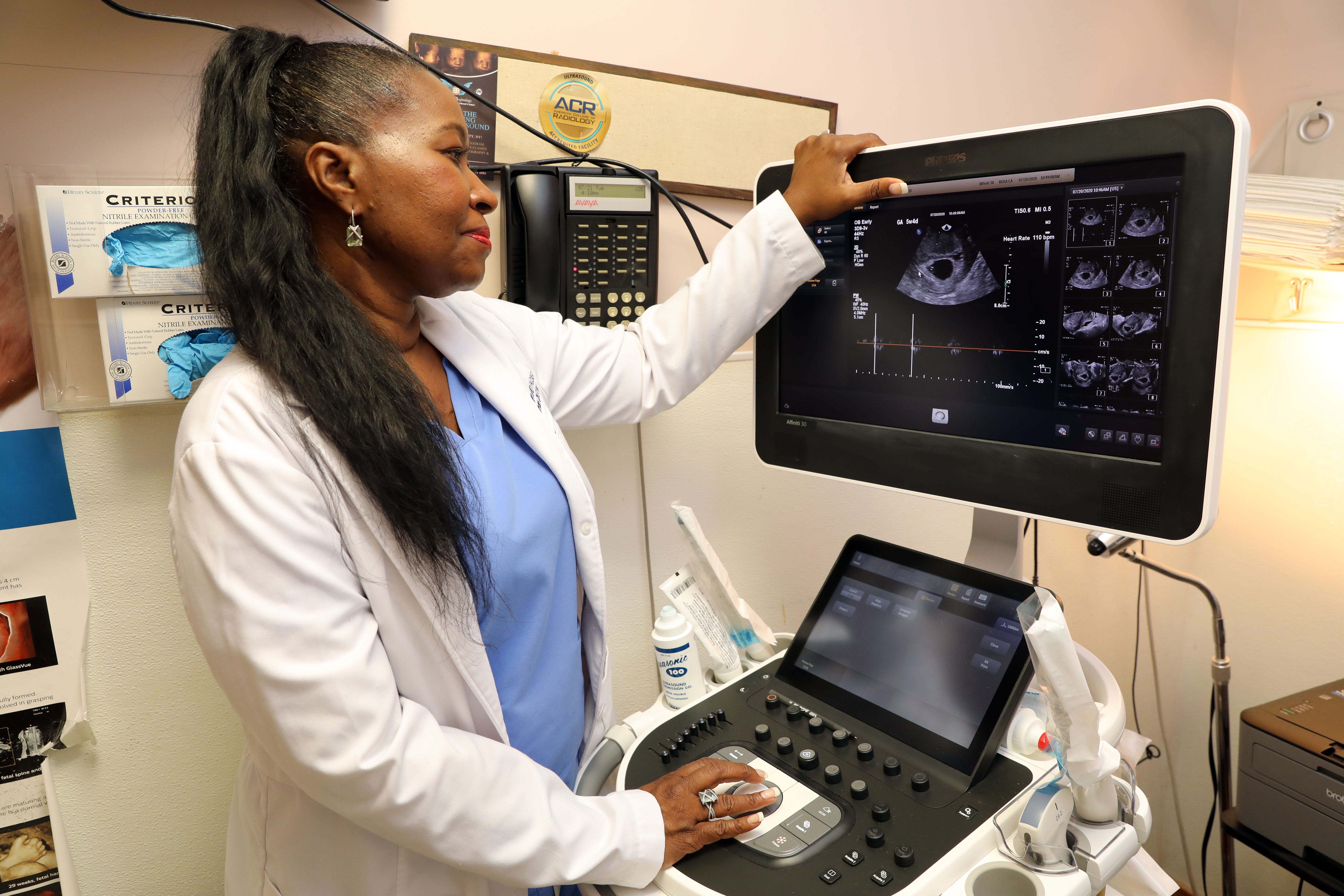
Of course non every white doctor is racist, and even Black doctors can sometimes be biased, says Long Sharps .
"There are some splendid, great doctors out advocating," she said. "And at present we're bringing things to the forefront, and speaking on biases that some of usa may not exist aware of — and at that place are biases even among doctors of color, towards people of colour."
Teaching patients to advocate for themselves should exist the offset step, said Greenidge.
"We take to start teaching our family unit and friends to advocate more than for themselves. And I remember it needs to be pointed out to physicians in the moment that they're doing it," she said.
The power of the handbag is another weapon consumers can wield.
"I don't think patients realize that they are really the consumers and they have more ability than they think," said Greenidge. "And then if you lot're non treating patients in a certain way, they can go somewhere else. Then you start affecting people economically. And things will change."
Sometimes, bias can show in the way a patient is medicated.
Studies have shown that Black patients are 22% less likely than white patients to receive any pain medication.
Riobè-Taylor, the mom of iii in Nyack, New York, had her showtime child at Greenwich Hospital in Connecticut in 2009.
Black maternity stories shared
Mother Nathalie Riobe-Taylor shares her delivery story
Mother Meredith LeJeune shares her pregnancy story
Iaishia Smith thought something was wrong. Her dr. disagreed
Dr. Paige Long Sharps emphasizes the 'care' in carergiving
'If Bister was white, Amber would be hither': A father'due south message afterward his son's mother died
She had planned a natural birth, but asked for pain medicine when she started feeling discomfort.
"They were like 'no, you're OK. You'll exist fine.' So, you know, I'm thinking, OK, mayhap they know something. In some time, information technology was completely unbearable," she said. "To sum it up, there was no pain medication, even though I did request for medication. I'm not one of those people that's going to scream at the top of my lungs, that's not my personality, but it just seems that you needed those types of histrionics to go that blazon of attention."
Incredibly, it happened a 2nd time at Nyack Hospital in 2010, when she was delivering her twins.
When she requested she be given a pain medication other than Percocet — that drug makes her delirious — she was told it was Percocet or nothing.

"Then I ended upwards not having anything at all. Having to deal with it."
Allsbrook, the director of Women'south Health and Rights at the Center for American Progress, said the most common thread in Black women's stories is that their hurting is not acknowledged.
Allsbrook said providers should have to go through cultural competency grooming and understand the customs they are serving.
The long legacy of integrating race into consideration in almost every field of medicine in some ways has reinforced and perpetuated inequities rather than assistance accost them, said Dr. Shah.
He believes racism is happening at two levels: structural and during care.
"So the structural bug are, for example, our cities are highly segregated in the Us and you can't access the services that y'all demand to be well and feel secure," he said. "And and then in that location's like the kind of racism where you show up for care and at that place'due south actual calculators that predict how ill y'all might get and where there's similar a cheque box, yous know, are you Black? Are you African American? If yous are, your treatment is dissimilar."
Some biases are entrenched in the medical tools that are routinely used.
Every bit an case from his field, Dr. Shah pointed to the vaginal nascency after a cesarean (VBAC) calculator. Information technology was developed by the National Institutes for Health to determine the success of natural nascency afterwards a cesarean, and asks if the female parent is Black or Hispanic. The calculator so predicts that Blackness and Hispanic women will have lower success rates than white women. (The website now notes a new estimator without race and ethnicity is under development.)
Samantha Magpiong, 27, a midwife in Cherry Hill, New Jersey, co-founded the Philly Nascency Fund with other expanse midwives to comprehend midwifery costs for Blackness expectant mothers.
She said some of her clients have moved to midwifery services because of unnecessary cesarean sections and the desire to have a vaginal birth with the next pregnancy.
"More and more than women are wanting to birth at home," said Magpiong, who is Asian, and has had her ain practice for a year. Before that, she spent 8 years every bit a birth worker and studying to be a midwife. She's attended near 200 births.
"Be it considering of the coronavirus, birth experiences they've heard from friends, or other reasons, more women are becoming interested, but due to the racial wealth gap sometimes have troubling affording the care."
Hospital administrators say they are doing their part.
Dr. Yoni Barnhard, manager of Obstetrics and Gynecology at White Plains Infirmary, said that while the hospital has non had whatever maternal deaths, they have participated in the New York Land Obstetric Hemorrhage Project, which reinforces best practices on how to accurately quantify blood loss in labor and delivery to reduce hemorrhage-induced morbidity and mortality.
The staff has also gone through a series of training seminars related to mitigating implicit bias and racial disparities.
The Westchester Medical Center Health Network (WMCHN) staff is trained annually in diversity and inclusion best practices. Additionally, the Advanced OB-GYN intendance team participates in unconscious bias training, as well available to all members of their workforce.
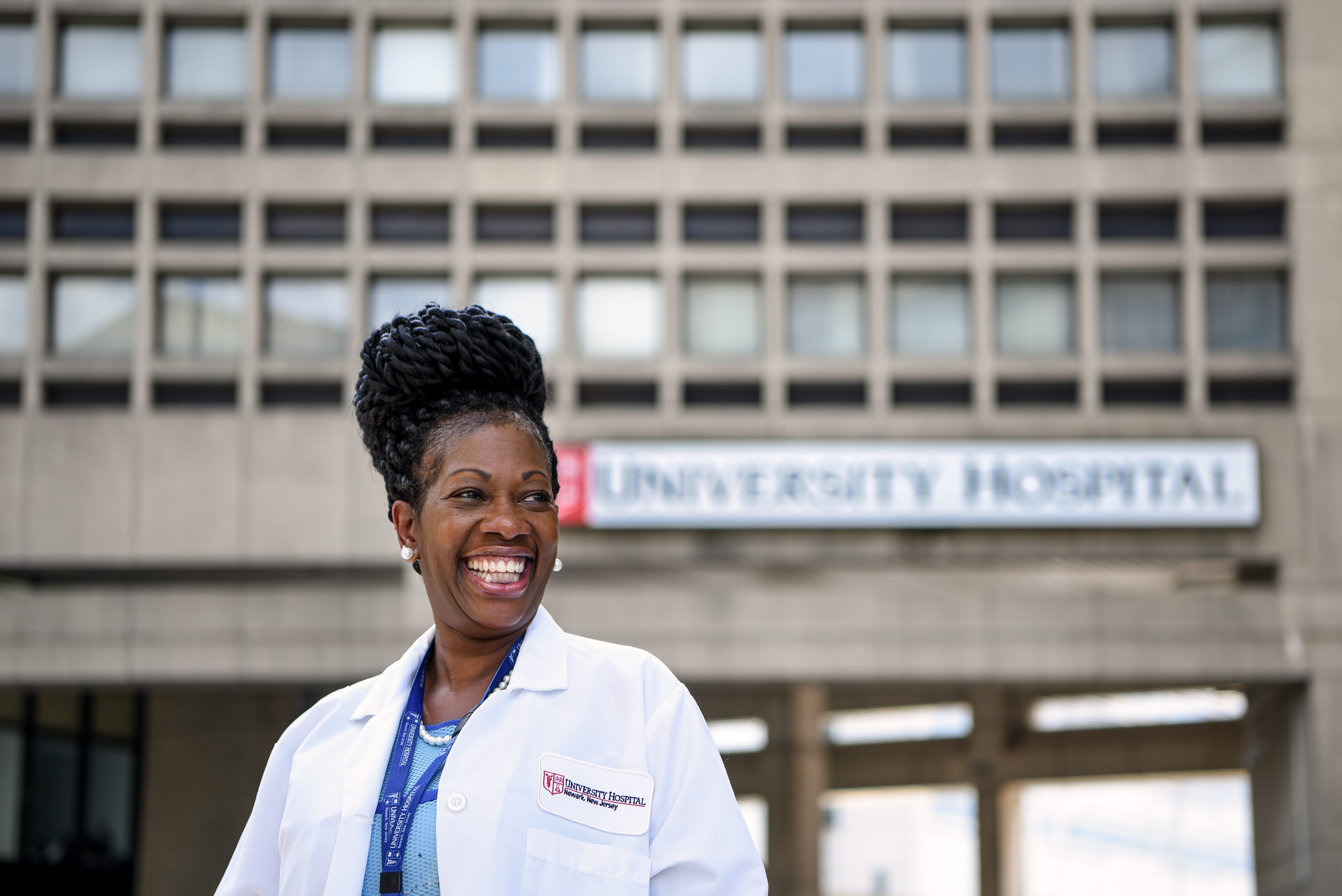
The hospital network has also partnered with community-based organizations, African-American social organizations, academic institutions and other external stakeholders and hosted education sessions and panel discussions on the issue.
WMCHN has partnered with Sis to Sister International,Inc., a Yonkers-based nonprofit that advocates for the advancement of women and families of colour.
"Why should Black women be dying at such rates, especially when nosotros wait at the advances in medicine and all of the dissimilar resources that are available," said Cheryl Brannan, founder of the nonprofit, which is putting together a report on Black maternal health.
Some lawmakers are trying to brand a deviation.
In March, the Black Maternal Health Momnibus, a legislative package that includes nine private bills, was introduced by Autonomous lawmakers Sen. Kamala Harris and Reps. Lauren Underwood, a offset-term congresswoman from Illinois who is a nurse, and Alma Adams, who represents North Carolina's 12th congressional commune. The bill proposes improvements including investments into social and environmental factors such as housing, transportation, and nutrition; a grant program for training on bias, racism, and discrimination in motherhood care, diversification of birthing care workforce and improve information collection to fully understand the crisis and inform solutions.
Dr. Paige Long Sharps emphasizes the 'care' in carergiving
Dr. Paige Long Sharps speaks about bias towards women of color and shares her experiences from when she started in the medical field decades ago.
Anne-Marie Caruso, NorthJersey
After more than than a decade of serving equally medical director of Montefiore Medical Center'south Department of Obstetrics & Gynecology, Dr. Long Sharps now works as a physician advisor at University Hospital in Newark.
Over the course of her career, she'due south witnessed colleagues being dismissive of patients based on their skin color or economic condition.
In her mind, winning the trust of the patient is a crucial skill that doctors must possess.
She recalls instructing young residents things similar "Don't have your back to the patient, think things about the patient, jot downwardly and go notes. Oh, her daughter graduated from college. So when they come back, y'all tin enquire, how's your daughter doing?," said Sharps, a longtime resident of Mount Vernon, New York. "It's the little things similar that that makes the patient feel similar the doctor actually knows them and is interested in them. And when y'all have those kinds of relationships there, the patients are more than apt to tell you lot what'south really wrong."
For Iaishia Smith, now a mother of a 1-twelvemonth-former healthy baby male child, it all comes down to ane affair: Advocating for yourself.
During her 2nd pregnancy, her vigilance with her lab reports got her an early diagnoses of gestational diabetes.
"I was diagnosed at 16 weeks, when normally that test is done around 25 weeks. Be your own advocate, ask questions. Expect at your lab reports. If yous feel something, acknowledge information technology. And if they discount it, bring it upwardly again. Be persistent."
Reporters Ashley Biviano and Adria Walker contributed.
Swapna Venugopal Ramaswamy covers women and power for the USA Today Network Northeast. Click here for her latest stories. Follow her on Twitter at @SwapnaVenugopal or e-mail her at svenugop@lohud.com
The team behind this story
REPORTING: Swapna Venugopal Ramaswamy, Adria Walker, Ashley Biviano
PHOTOGRAPHY AND VIDEOGRAPHY: Tania Savayan, Anne Marie Caruso, Joe Lamberti
PHOTO EDITORS: Carrie Yale, Sean Oates, Magdeline Bassett
EDITORS: Liz Johnson, Dan Sforza
DIGITAL Production AND Evolution: Spencer Holladay, Maddi Ference, Phil Strum, Annette Meade
Print Product: Scott Muller, Michael Babin
Source: https://www.lohud.com/in-depth/news/2020/09/08/as-black-woman-when-youre-pregnant-your-own-advocate/5442487002/

Post a Comment for "If You're a White Women and Are Currently Pregnant With a White Baby Boy Twitter"